
Manufactured Flex RangePro-Flex Training Platform
A practical training and demonstration platform that gives engineers and technicians hands-on experience with ABB’s REX615 protection relay — without risking operational equipment.
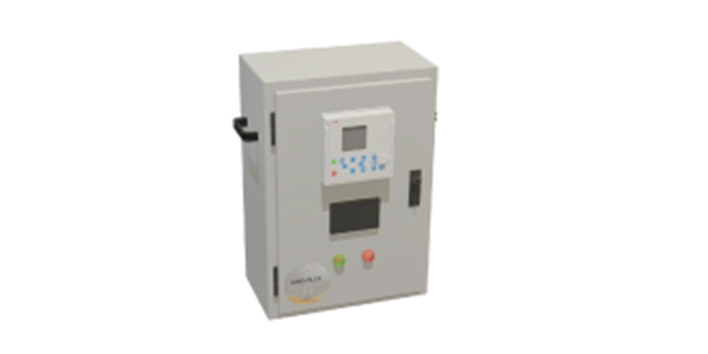
A fully wired, self-contained cabinet built around the ABB REX615 multifunction protection & control relay, complete with an externally connected contactor for real-load demonstration. It runs as-is from a standard 220 VAC domestic socket in any training centre or workshop. Engineered and assembled by PPE Technologies.
Built around practical skills developmentLearn the relay hands-on, without operational risk
Pro-Flex creates a dedicated environment for developing practical protection and control skills away from live plant conditions. It gives teams a structured way to build confidence, test knowledge and become familiar with real-world relay behaviour before applying those skills in operational settings.
No operational risk
Teams train and experiment on the real REX615 without exposing their processes or personnel to the dangerous voltages found where the relay is normally installed.
Real hands-on access
Direct access to the HMI, binary and analog I/O, protection settings, local and remote control, condition and fault monitoring, PLC logic and test points — the same tasks performed on site.
Self-contained and ready to run
All wiring, cabinetry and an externally connected contactor are included, so the Pro-Flex operates as-is from a single 220 VAC socket in a training centre or workshop.
ENGINEERED FOR PRACTICAL TRAININGHands-On Protection & Control Training
The PPE Technologies Pro-Flex Training Platform provides a safe, practical environment for developing real-world skills with the ABB REX615 protection and control relay.
Fully wired and powered from a standard 220 VAC socket, Pro-Flex enables hands-on training without the risks of working on live operational equipment.
Who the Pro-Flex is forWhere Pro-Flex can be positioned
Pro-Flex is intended for environments where practical understanding of protection and control systems needs to be developed before working on live equipment. It creates a flexible learning platform that can support training, familiarisation and technical skills development across different teams and engineering disciplines.
Training centres
Structured relay training for apprentices, learners and technical staff on current ABB protection technology.
Utility & industrial workshops
On-site skills development so teams can practise before working on live protection panels.
Protection & control engineers
A safe environment to configure, test and verify REX615 protection settings and logic.
OEMs & panel builders
Familiarisation with the REX615 as the all-in-one replacement for the ABB 615 and 620 relay series.
Technical overviewFrom learning concept to practical capability
Pro-Flex turns protection and control theory into a structured hands-on learning experience built around real equipment behaviour. The technical overview alongside shows how the platform supports practical familiarisation, testing and skills development before those same tasks are carried out in live operational environments.
Product category
Practical training and demonstration platform for the ABB REX615 multifunction protection & control relay
Power & setup
Fully wired, self-contained cabinet operating from a single 220 VAC domestic socket; ready to use as-is in a training centre or workshop
Relay platform
ABB REX615 — the all-in-one replacement for the ABB 615 and 620 relay series — supporting feeder, bay, transformer, line-differential, motor, generator, busbar, capacitor-bank and voltage protection
Hands-on access
Human-machine interface, binary & analog inputs/outputs, protection settings, local & remote control, condition monitoring, fault monitoring, PLC logic, test points, and an externally connected contactor for real-load demonstration
Practical tests supported
Secondary injection (start/operate/reset, pickup/dropout, operate time); circuit-breaker control verification (open/close, trip simulation, coil outputs, interlocks); HMI & event verification; internal relay fault and auxiliary-circuit testing (including arc-flash sensor checking)
Engineering tool
Configured using ABB PCM600 for I/O and signal mapping, giving users exposure to how protection and control equipment is managed, monitored and diagnosed on site
Manufacturing
Engineered, wired and assembled by PPE Technologies
Product resourcesResources to extend the learning
The supporting material builds on the Pro-Flex training concept by providing a clearer view of the platform, its practical learning approach and the engineering context behind it. The resources below offer added depth for understanding how Pro-Flex supports structured skills development and technical familiarisation.
Read More
Protection-and-control signal path
A protection-and-control exercise can be understood as a signal path through several related stages. An input represents a condition presented to the relay, while protection settings determine how that condition is assessed. Relay logic then relates the input information to the configured response, which may include binary or analog outputs, local or remote control, and an indication through the human-machine interface (HMI).
Binary I/O represents discrete states or commands, such as an open or closed status. Analog I/O represents a measured value that changes over a range. HMI indications present selected states and information for the operator, while event information records changes associated with the exercise. Condition and fault monitoring provide further ways to observe what the relay is reporting as the signal path changes.
The externally connected contactor provides a point at which a control response can be represented in the exercise. The exact sequence depends on the relevant settings, logic, I/O assignments, and connected circuit. These relationships are useful to identify before interpreting an indication or checking a control response.
How the listed test terms differ
Secondary injection introduces a test signal into the relay-side measurement path rather than applying primary power to the associated electrical system. In a protection exercise, start or operate refers to the point at which the relay responds to the applied condition, while reset refers to the return from that response when the condition is removed or reduced. Pickup and dropout describe the corresponding change into and out of an operating state. Operate time describes the elapsed time between the relevant test condition and the defined relay response; any applicable limits must be agreed for the particular exercise.
Circuit-breaker open, close, and trip checks refer to different control actions or simulated actions. Coil outputs are the relay-side outputs associated with those commands. Interlocks are conditions that permit or prevent an action, so their effect should be considered when a command does not produce the expected state change.
HMI and event verification concerns whether the intended state, command, or change is represented in the relevant operator indication and event information. Internal relay-fault and auxiliary-circuit testing concerns fault conditions within the relay or its associated auxiliary paths. Arc-flash sensor checking is a distinct check of the relevant sensor input and its reported response. These terms describe different points of observation and should not be treated as interchangeable test results.
From PCM600 mapping to operator feedback
I/O and signal mapping establishes how relay inputs and outputs are identified in relation to the exercise. PLC logic is a separate layer: it describes the relationships and conditions that govern how signals are handled. Keeping mapping and logic distinct helps clarify whether an observed result relates to an assignment, a control condition, or the logic applied to that condition.
The HMI presents selected relay information for local observation, while event information provides a record of relevant changes. Condition monitoring and fault monitoring are also separate concepts. Condition monitoring concerns the reported state or condition being observed; fault monitoring concerns the reporting of a fault condition. Reviewing these layers together can help distinguish the originating signal from the resulting indication.
A useful review sequence is to identify the input or command, check its mapped signal, consider the applicable PLC logic and protection settings, and then compare the relay response with the HMI, event, condition, and fault information. The sequence is a terminology-based way to structure a training exercise; the applicable configuration and expected response remain specific to the relevant setup.

Pro-Flex Flyer
Detailed product information, REX615 functions, accessible features and supported relay tests.
Pro-Flex Brochure
Detailed product information, capabilities and supporting content.

Request project information
Start an application-specific conversation with the PPE Technologies team.
Set up practical REX615 training
Speak to the PPE Technologies team about your REX615 training requirements and explore a Pro-Flex setup designed around your team, learning goals and technical environment.