
Manufactured Flex RangeISO-Flex Range
A heavy-duty medium-voltage on-load isolator that lets maintenance teams safely isolate and lock out high-power equipment right on the plant floor.
ISO-Flex is a snap-action, protected on-load isolator for local isolation of mill motors, transformers and line feeds — 6.6 to 15 kV, 630/1250 A, with HRC fusing, shunt trip and optional electronic protection. Built on an ABB NAL/F isolator to IEC 62271-105, 60129 and 60694 by PPE Technologies.
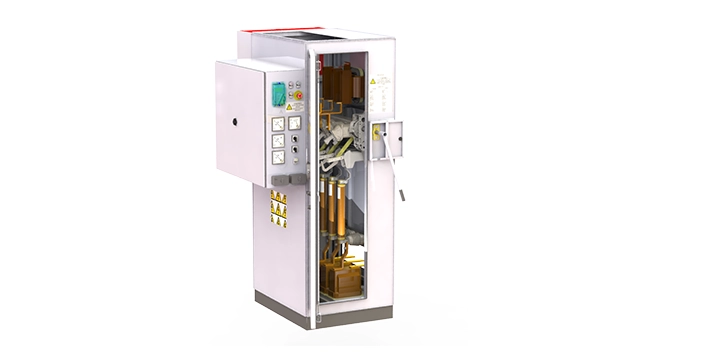

Built around plant-floor safetyIsolate and lock out, locally
Iso-Flex brings isolation closer to the equipment it protects, supporting a more practical approach to plant-floor maintenance and operational control. By integrating isolation into the local electrical architecture, it helps create a safer, more efficient environment for planned work and day-to-day plant activities.
Isolate and lock out locally
Maintenance teams safely isolate and lock out high-power equipment on the plant floor, without calling electricians to rack out and lock out substation switchgear — saving time, cost and complication.
Configured to the application
Manual snap-action or push-button motor mechanism; HRC fuses with striker bar and shunt trip for short-circuit protection and fuse-blown interlocking; optional electronic relay for IDMT overcurrent, overload and earth-fault.
Robust and safe
An IP54 enclosure with an ABB NAL/F on-load isolator to IEC 62271-105, suitable for indoor or outdoor use, mitigating arc-flash and outage risk.
Typical project environmentsWhere ISO-Flex can be positioned
ISO-Flex is designed for installations where safe, convenient isolation needs to be positioned closer to the point of use. Its adaptable format allows it to fit naturally into a variety of plant layouts and operating environments, supporting safer maintenance practices across different types of electrical equipment.
Mill motors & heavy drives
Local isolation of high-power mill motors for safe maintenance.
Transformers & line feeds
On-load isolation of transformers and feeder circuits.
Mining & heavy industry
Plant-floor lock-out where racking out substation switchgear is impractical.
Indoor & outdoor installations
IP54 isolation for a range of site environments.
Technical overviewDesigned around safe isolation
ISO-Flex brings the key elements of medium-voltage isolation into a structured, application-focused solution. The overview alongside sets out the main technical considerations that influence how the system is configured, integrated and applied within the wider electrical installation.
Product category
Heavy-duty medium-voltage protected on-load isolator
Configuration
6.6 / 11 / 15 kV, 630 / 1250 A, fault current up to 31.5 kA; IP54 enclosure; indoor or outdoor; snap-action manual or push-button motor mechanism
Protection & control
ABB NAL/F on-load isolator with HRC fuses, striker-bar auxiliaries and shunt trip (short-circuit protection and fuse-blown interlocking); optional electronic relay for IDMT overcurrent, overload and earth-fault
Interfaces
Key interlocking, earth switch, status indicators and auxiliary power transformer options; local lock-out for maintenance
Manufacturing
Engineered and assembled by PPE Technologies to IEC 62271-105, 60129 and 60694; ISO 9001-2015
Project support
Design coordination, configuration to load type, installation support and commissioning
Documentation
Project drawings, test records, operating information and supporting product documents
Product resourcesExplore the ISO-Flex resources
Supporting material provides additional context around the ISO-Flex approach to safe medium-voltage isolation and how it fits within plant electrical systems. The resources below offer a useful next layer of information for understanding the solution beyond the main product overview.
Read More
Understanding medium-voltage isolation terms
Medium-voltage describes the voltage range used in an electrical power system between low-voltage distribution and higher-voltage transmission levels; the applicable voltage class is defined by the project requirements. An on-load isolator is switching apparatus intended to provide isolation while the relevant electrical circuit is carrying its normal load, subject to the apparatus and installation requirements that apply.
Local isolation means that the isolation point is located close to the equipment or circuit being worked on. Lock-out is the practice of securing an isolation position so that unintended operation is restricted during maintenance. The exact isolation procedure, access arrangements, and verification steps should be defined for the applicable installation and operating rules.
Protection, indication and tripping terminology
An HRC fuse is a high-rupturing-capacity fuse that interrupts an excessive current within its specified application conditions. A striker bar is a fuse accessory that provides a mechanical indication or actuation when the associated fuse operates. A shunt trip is an electrically initiated mechanism that causes switching apparatus to trip when its control circuit receives the applicable signal.
Fuse-blown interlocking refers to an arrangement in which the condition of a fuse is used within an interlock scheme to restrict or control a related operation. IDMT overcurrent protection operates when current exceeds a defined threshold, with an operating time that generally becomes shorter as the current magnitude increases. Overload describes operation above the intended continuous load level, while an earth-fault is an unintended electrical connection between an energised circuit and earth. The protection functions, indications, and tripping logic for a particular installation should be agreed as part of the applicable technical requirements.
Reading the electrical notation
The notation used for electrical equipment describes different technical quantities and enclosure characteristics. kV means kilovolts and expresses voltage; A means amperes and expresses current; and kA means kiloamperes and is used for larger current values, including fault-current notation. These symbols describe different quantities and should not be treated as interchangeable.
IP54 is an enclosure designation in the Ingress Protection Code. The first digit relates to protection against solid foreign objects, and the second digit relates to protection against water. The meaning of an enclosure designation should be read together with the specified installation conditions and the project requirements; it does not by itself define every environmental or operating condition.

ISO-Flex Flyer
A concise introduction to ISO-Flex, highlighting its purpose and role in safe medium-voltage isolation.
ISO-Flex Brochure
A more detailed overview of ISO-Flex, with added context around configuration, protection and application requirements.

Request project information
Start an application-specific conversation with the PPE Technologies team.
Discuss your isolation requirement
Speak to the PPE Technologies team about your isolation requirements and explore an ISO-Flex solution suited to your equipment, site conditions and maintenance needs.